
Priority 01
Tie new subdivision approvals to real road, water and sewer capacity, so the people already here are not the ones absorbing the strain.
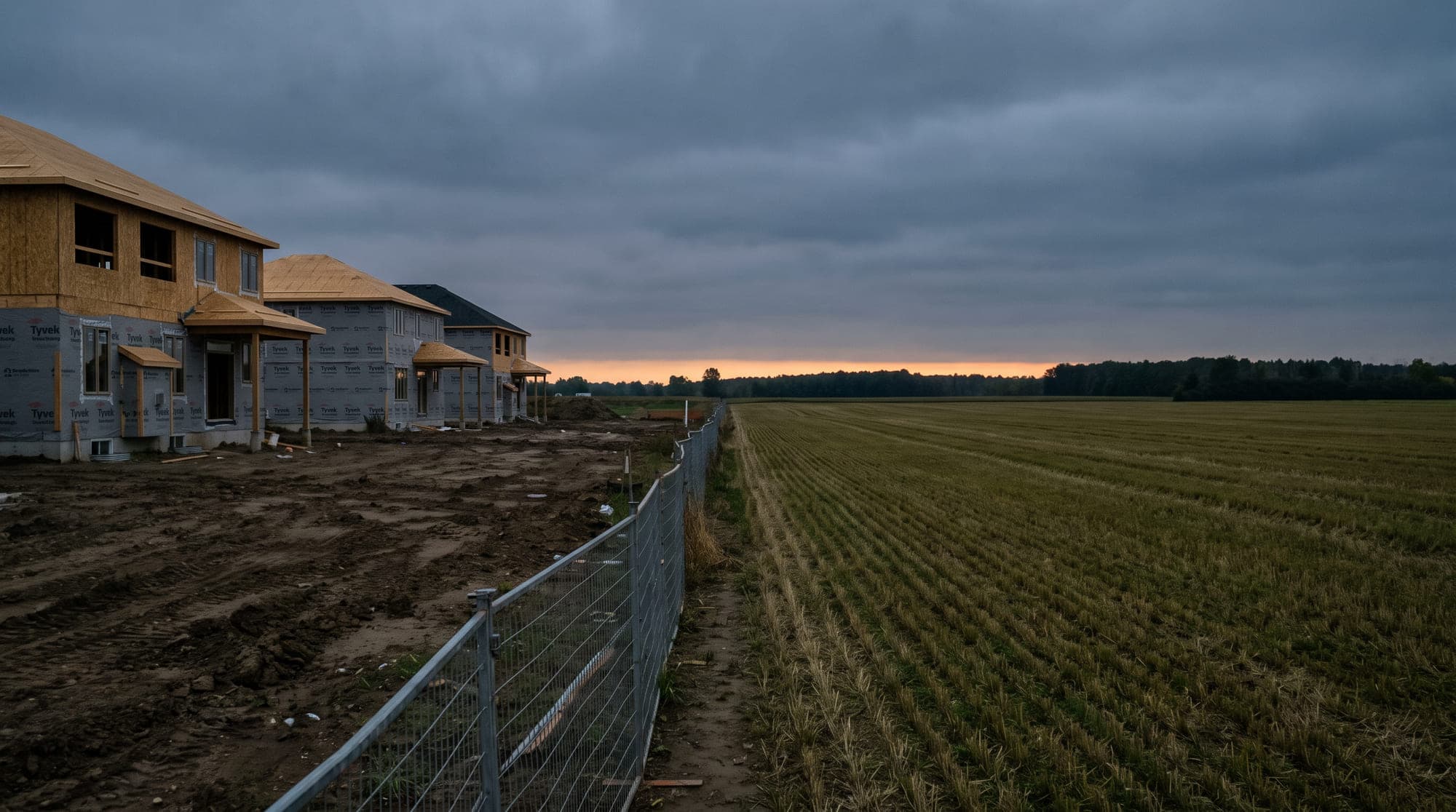
Header image: The edge of a new subdivision meeting harvested farmland under an overcast sky
Bradford West Gwillimbury is one of the fastest-growing municipalities in Ontario. That is not a problem to be stopped. It is a sequence to be managed. Right now the houses are arriving ahead of the infrastructure that carries them.
Every new subdivision draws on the same finite pipes, the same intersections and the same treatment capacity as the street you already live on. When approvals run ahead of servicing, the cost does not disappear. It lands on existing residents as pressure drops, longer commutes and deferred repairs on roads that were already due.
The fix is not complicated, but it does require a council willing to say 'not yet'. Development approvals should be conditional on demonstrated capacity, staged against the Town's own servicing and transportation master plans, and revisited publicly whenever a developer asks for a phasing change.
Growth pays for growth when it is sequenced properly. Development charges, front-ending agreements and community benefits charges are the tools the Municipal Act already gives us. What has been missing is the discipline to use them before the shovels are in the ground rather than after.
The rest of the platform